
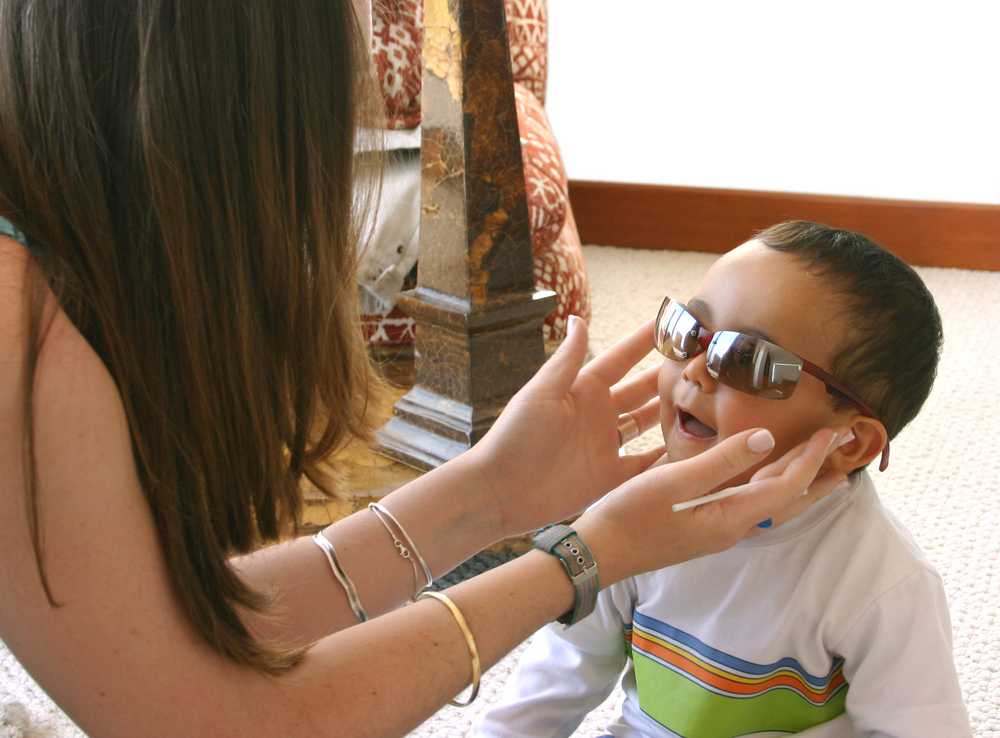


Begin to connect interests in the world through a trusted relationship (utters squeal of delight when adult brushes flower against cheek).
Show interest in others (kicks feet excitedly when someone they care about approaches; smiles or gazes at caregiver).
Show interest in themselves (look at self in mirror and plays with their feet).
React to new sights, sounds, tastes, smells, and touches (turn head toward loud sound, repeatedly stick out tongue when tasting a new food).
Explore the indoor and outdoor environment using all senses - smell, hear, see, feel and taste (puts objects in their mouth).
Move toward interesting people, sounds, objects, and activities, with appropriate supports.

Communicate with sounds or movements to indicate preferences (make excited facial expressions or sounds for food they like; push away food they don’t like).
Independently explore the different qualities of an object (notice the sound of a rattle, exploring it further by putting in their mouth).
Focus and attend to people and things around them.
Repeat interesting actions over and over (push button to make toy light up).
Notice when the expected does not happen (makes disappointed sound when squeaky toy does not make a sound when pushed).
Try over and over to make things happen (make sounds to get attention, work to get something that is out of reach).
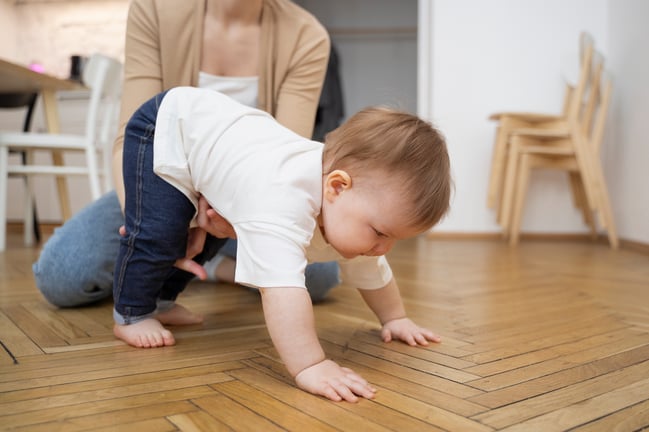
Explore new experiences both indoors and outdoors (toys, foods, people, spaces) with support of a familiar trusted adult.
Look to adults for cues and proceed when reassured.
Try to do things that are hard for them (stretch to reach toy, work to crawl or walk, try to pick up crumb with pincer grasp).
Try simple strategies to get what they want (make noise, move or reach toward things, reject unwanted item).
Try a familiar action in a new activity (hit a button on a new toy, try to open a variety of containers).
Use trial and error to get something done, get what they want, or solve simple problems.
Engage in solitary play.
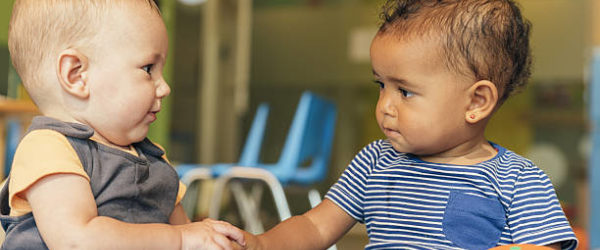
Show interest in other children playing (watch, turn toward).
Imitate sounds, facial expressions, or gestures (cover face with hands, hands up for “so big”).
Play with simple objects, using them to make sounds and explore cause and effect (shake a rattle-hear a sound, drop a spoon-caregiver picks it up).
Begin to participate in give-and-take exchanges of sounds and gestures (known as “serve and return”).
Use everyday household objects for play (spoons, pots and pans, plastic bowls).
Try a familiar action with a new object or person (try to bounce a block, wave bye-bye to a toy, make a sound to get a new adult’s attention).
React to unexpected events with laughter and interest.